Regular physical activity is important for the physical and mental health of older adults. However, staying active is not always easy for frail older adults. Reduced mobility, chronic conditions, cognitive impairment or fear of falling can create barriers to movement. This is why it helps to see physical activity not only as a separate activity or therapy session, but as part of everyday care.
By adapting opportunities for movement to residents’ abilities, interests and physical capacity, being active can become more accessible. This can range from walking, cycling and functional exercises to moving to music, interactive games or group activities.
How can you encourage physical activity in frail older adults?
Encouraging movement starts with focusing on what someone can still do. An activity does not have to be intensive or lengthy. Short periods of movement throughout the day can also contribute to a more active care environment.
It is important to consider not only physical abilities, but also personal interests and motivation. One resident may enjoy targeted exercises, while another may be more engaged by music, a game or cycling through a familiar environment.
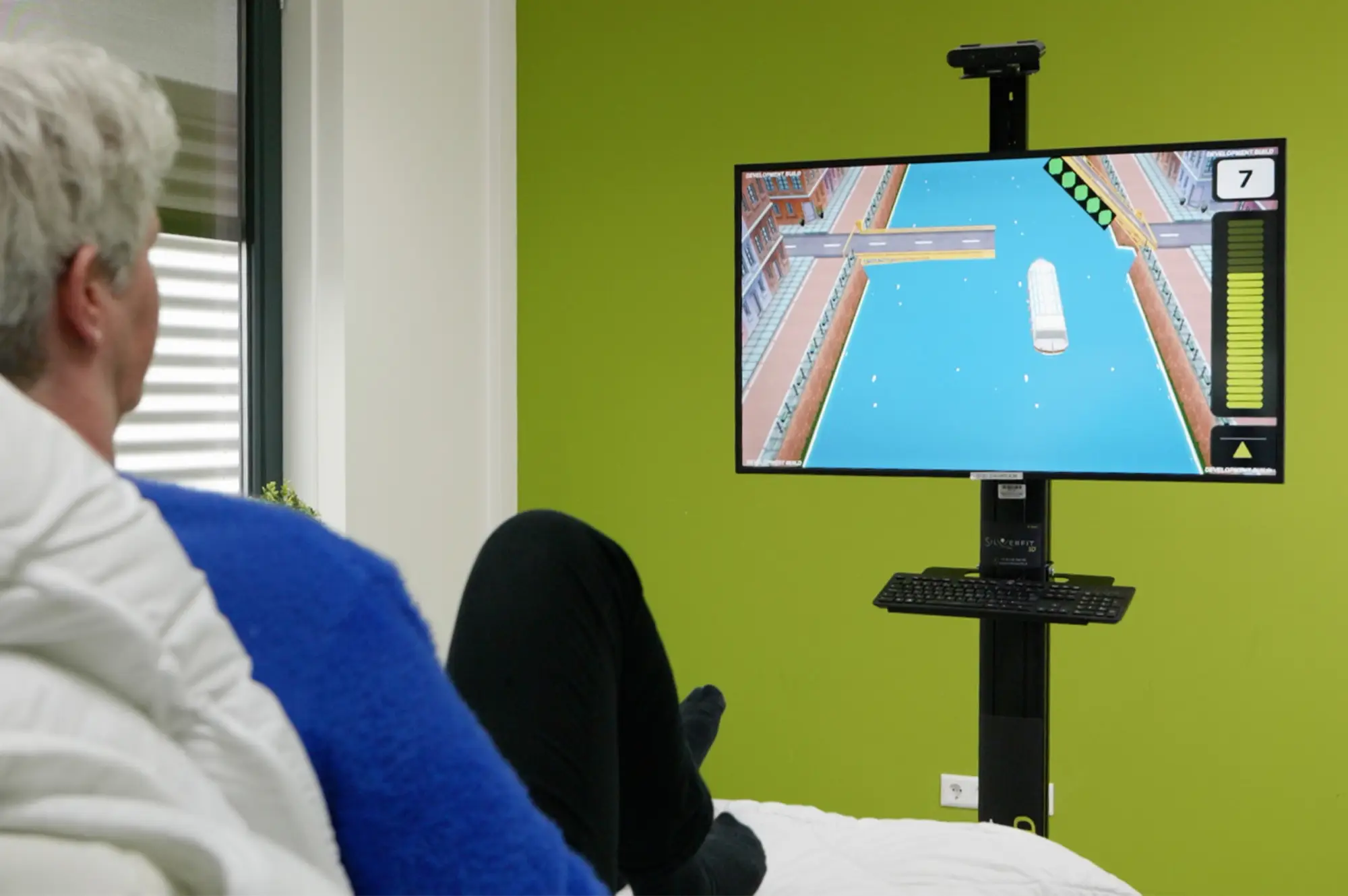
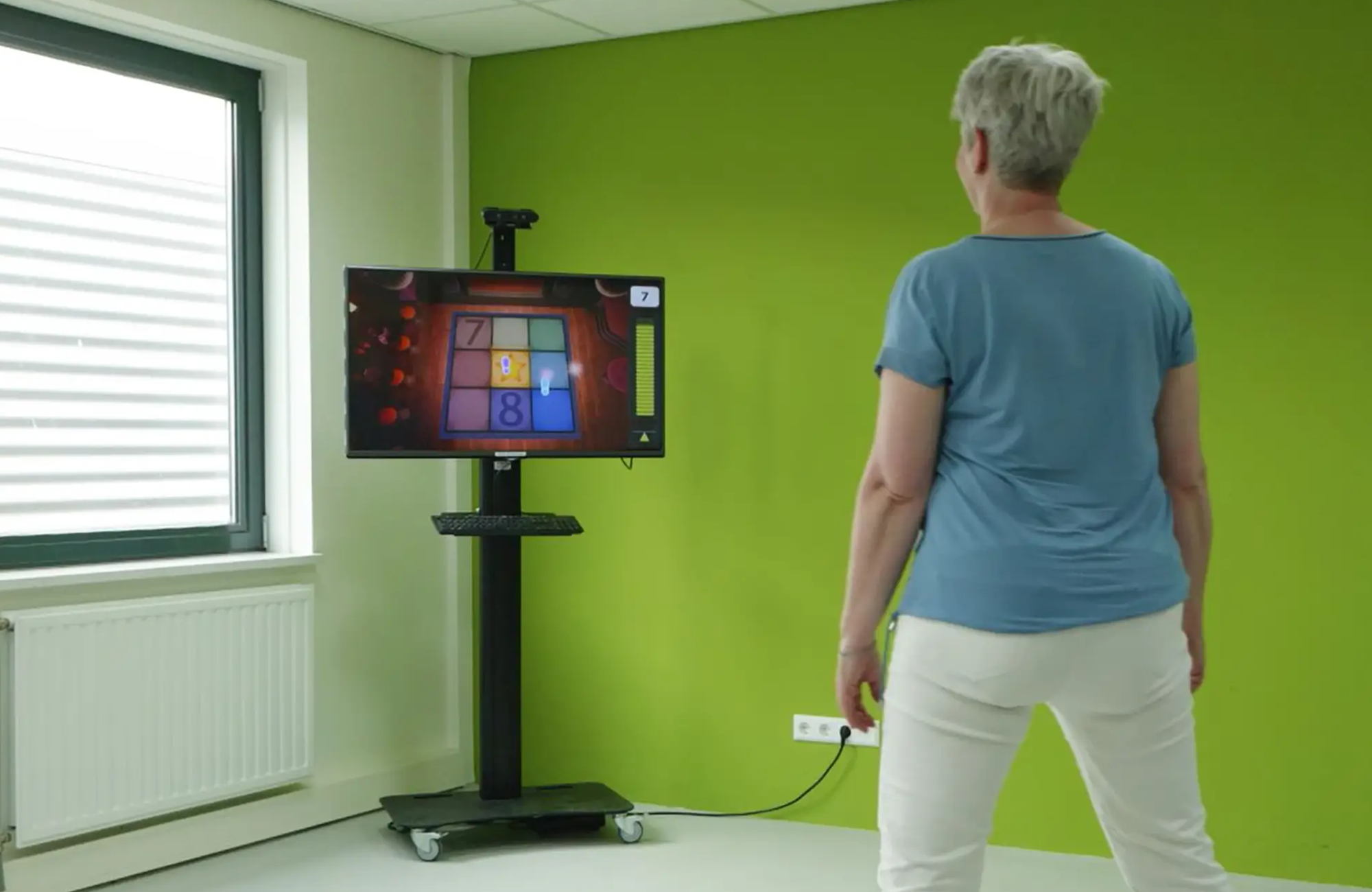
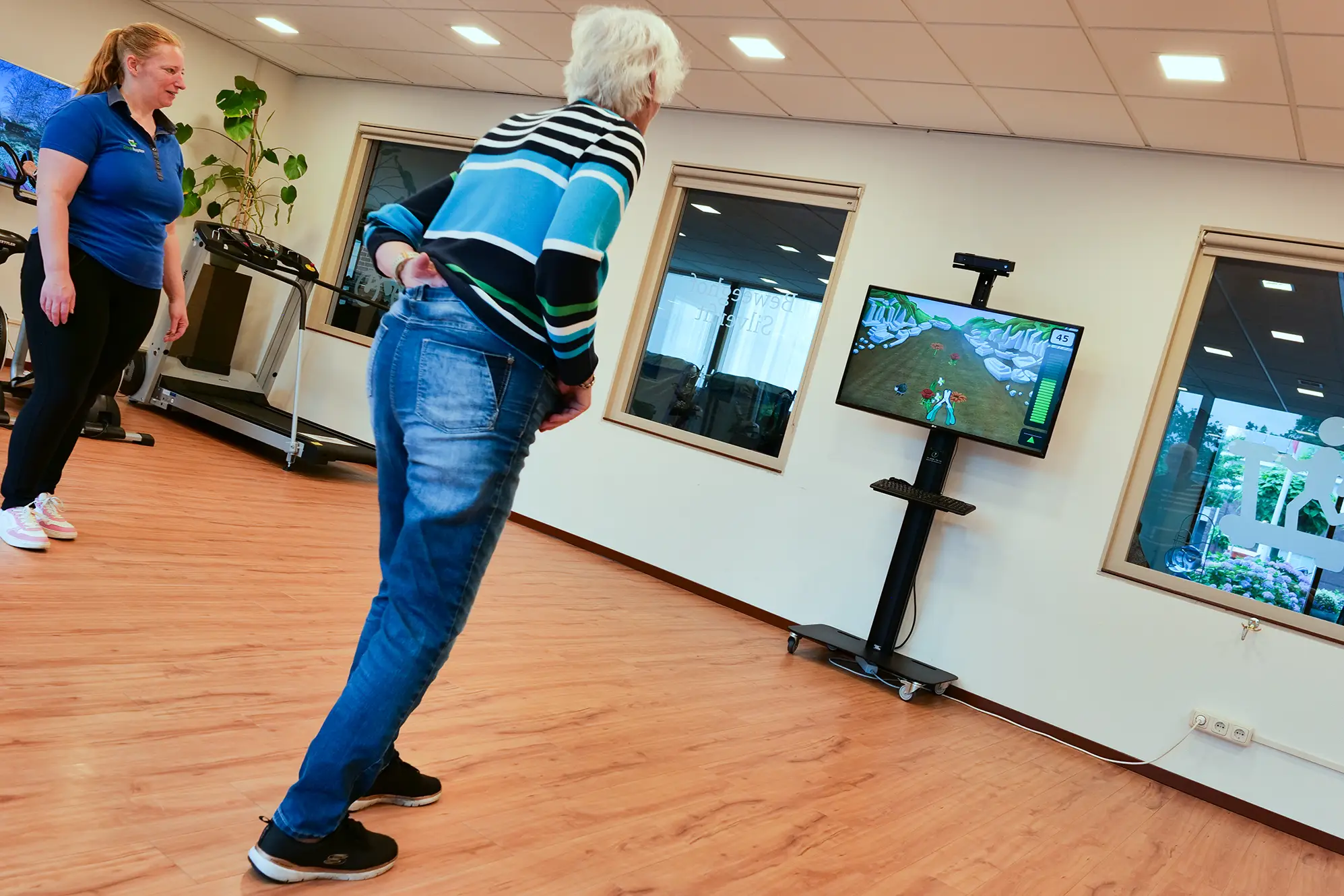
Variety can help engage residents with different needs and preferences. In addition to walking and everyday activities, interactive forms of exercise can be used. SilverFit 3D offers exercises in a variety of interactive game environments, SilverFit Mile combines physical activity with virtual cycling routes, and SilverFit Alois can be used for accessible activities and engagement.
Technology is not a goal in itself, but one of the tools care professionals can choose from.
How can you increase physical activity in a nursing home?
Increasing physical activity in a nursing home requires more than organising an exercise session at a fixed time each week. Integrating movement into everyday routines creates more opportunities for residents to be active throughout the day.
Examples include:
- standing up and moving independently whenever possible;
- walking to group activities;
- performing everyday activities as independently as possible;
- incorporating short periods of movement throughout the day;
- cycling or walking;
- individual exercises;
- group exercise activities.
Physical activity is therefore not solely the responsibility of physiotherapists or exercise professionals. Nurses, care staff and activity coordinators can also contribute within their own roles.
For care organisations, this means making physical activity part of everyday practice. What opportunities for movement are available on the ward or unit? Which residents require additional support? Who can facilitate activities? And which tools can help staff provide suitable activities?
Which physical activities are suitable for older adults?
There is no single type of physical activity that is suitable for every older adult. A good exercise programme therefore offers a range of activities at different levels.
Examples include walking, cycling, balance and strength exercises, arm and leg exercises, moving to music, functional everyday activities and interactive exercise games.
Starting positions can also vary. Some residents may be able to exercise while standing, while others may be better suited to exercising from a chair or wheelchair. For residents with reduced mobility, exercises can be adapted or motor-assisted movement may be an option.
The most important question is therefore not which activity is best for older adults, but which activity is appropriate for this resident, at this particular moment and for this specific goal.
How can you motivate older adults to exercise?
Knowing that physical activity is important does not automatically mean that someone is motivated to exercise. Motivation can decrease, particularly when exercises involve a great deal of repetition or require considerable effort.
Several factors can help:
- matching activities to personal interests;
- setting achievable goals;
- providing sufficient variety;
- making progress visible;
- providing immediate feedback;
- combining movement with games, music or familiar experiences;
- exercising together with others.
Interactive technology can combine some of these elements. One resident may respond well to an exercise with immediate visual feedback. Another may be motivated by virtually cycling through a familiar city or region. For someone else, participating in a group activity may work better.
Personal attention therefore remains essential: what motivates someone differs from person to person.
How can you organise group exercise activities?
Group exercise combines physical activity with social interaction and can be organised in a variety of ways.
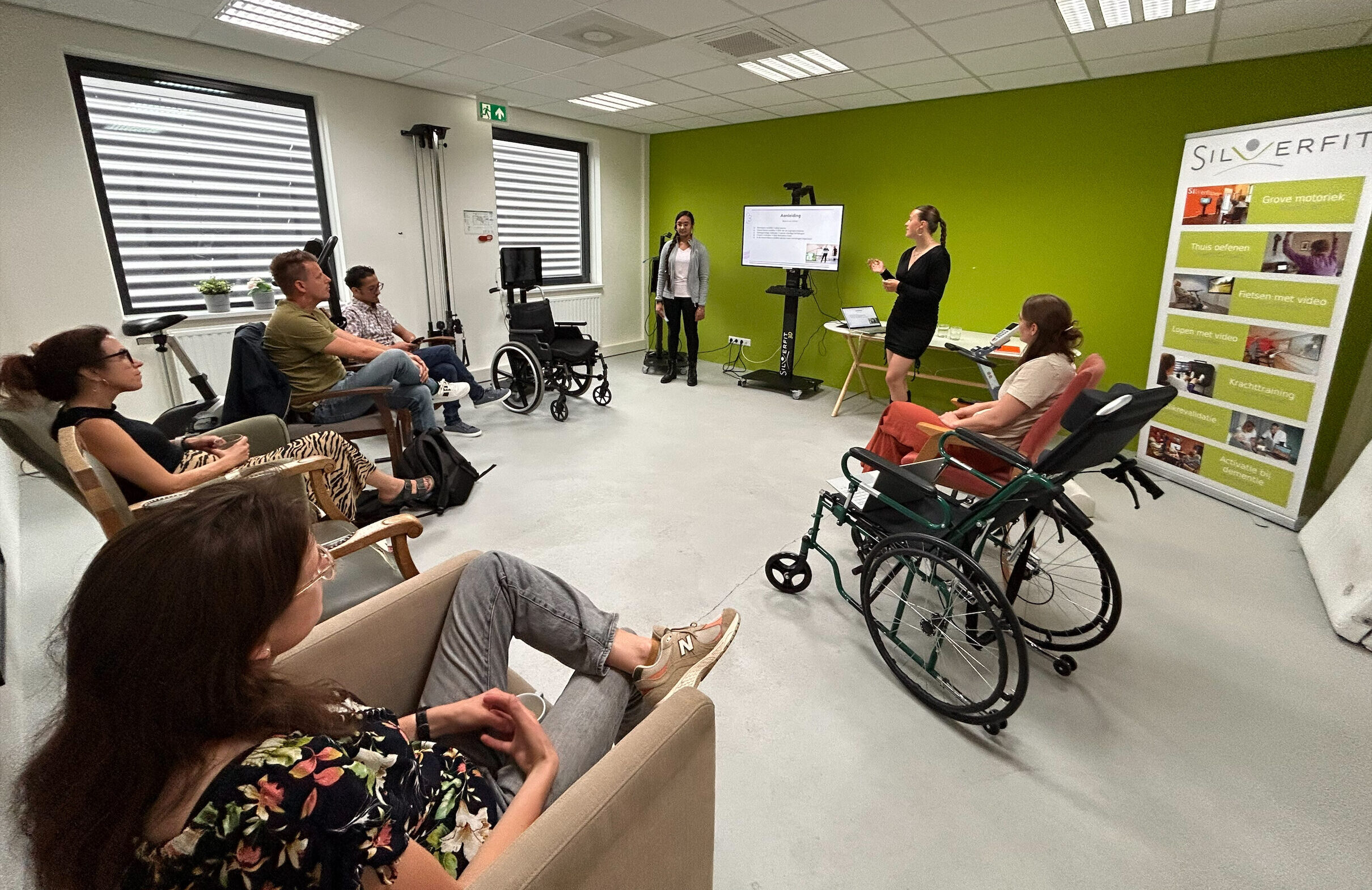
Start with activities that allow participants with different abilities to take part. One resident might participate from a chair while another performs the same movement while standing. Take mobility, cognition, safety and the level of support required into account.
A group session could include a shared warm-up, simple exercises, a game or movement activity and a gentle cool-down. Interactive activities can also be incorporated into group sessions, allowing residents to move together, encourage one another or take turns.
Making physical activity part of everyday elderly care
Increasing physical activity in elderly care does not ultimately depend on one specific activity or technology. It requires an environment in which residents have opportunities to move at different times of the day and at different levels.
SilverFit 3D, SilverFit Mile and SilverFit Alois can form part of this broader range of activities. They offer different ways to support movement and engagement, allowing professionals to choose an activity that matches the resident, the intended goal and the moment.
The principle remains simple: focus on what someone can do, find out what motivates them, and make movement part of their everyday routine.
References
- World Health Organization (WHO). WHO Guidelines on Physical Activity and Sedentary Behaviour. Geneva: World Health Organization, 2020.
- World Health Organization (WHO). Physical Activity and Sedentary Behaviour: A Brief to Support Older People. Geneva: World Health Organization, 2022.
- World Health Organization (WHO). Promoting Physical Activity for Older People: A Toolkit for Action. Geneva: World Health Organization, 2023.