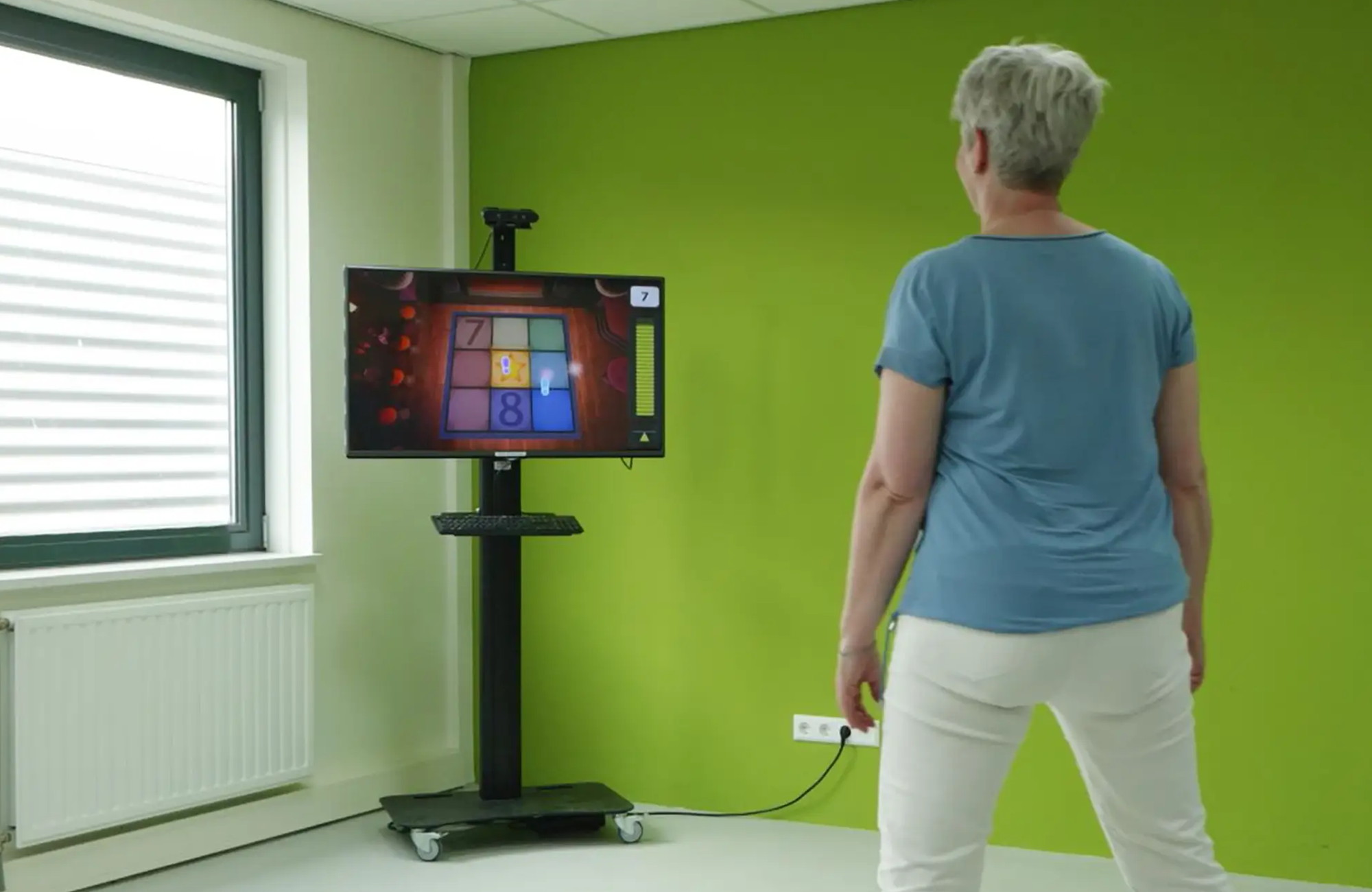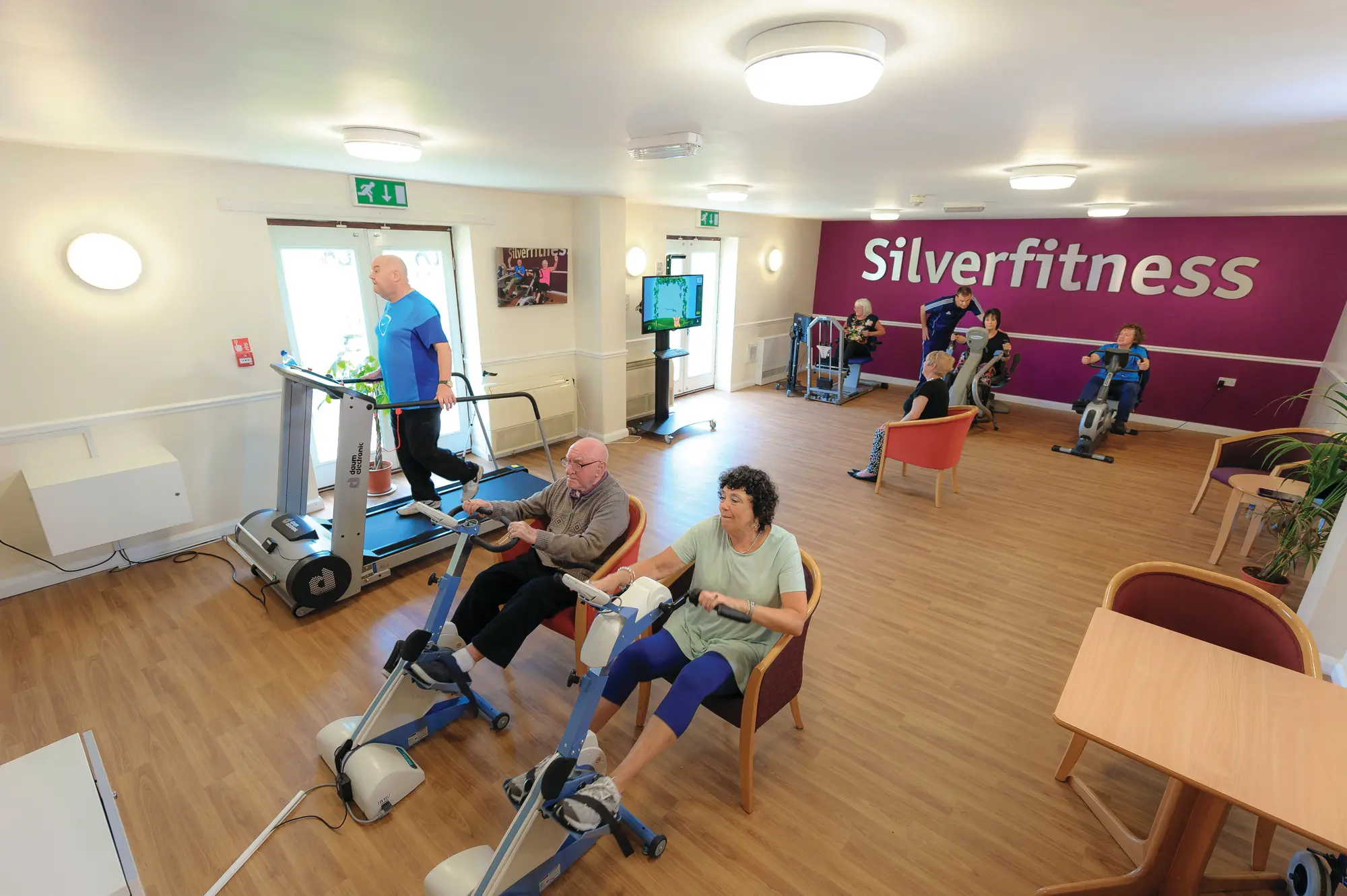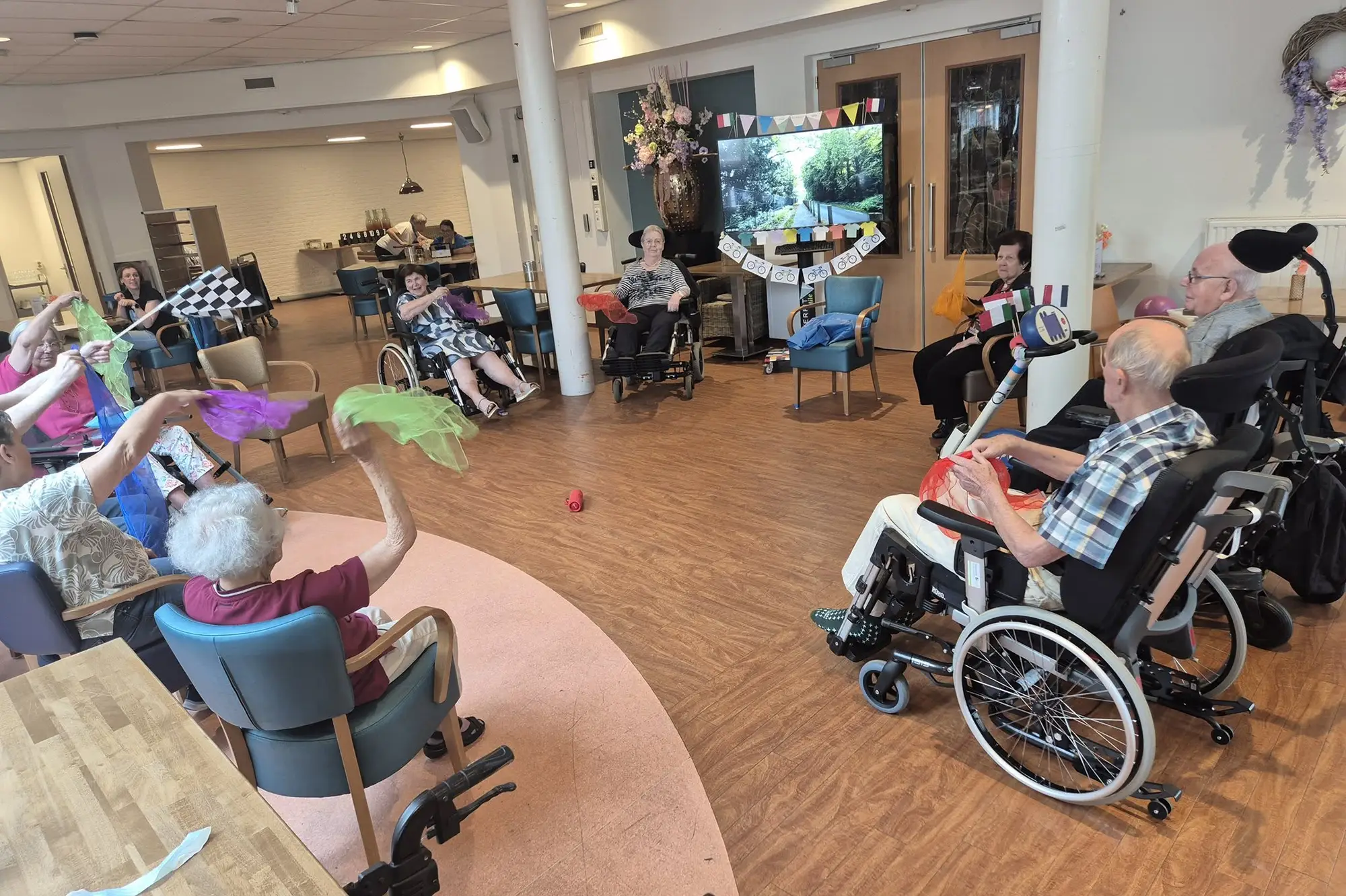

For activity coordinators and care or location managers, one central question remains: how do you offer meaningful activities to clients with an intellectual disability? Activities that match their abilities, support their wellbeing, and are feasible within the daily schedule? SilverFit provides a clear, practical answer with its solutions: the SilverFit Alois, SilverFit Mile, and SilverFit 3D.
These systems combine movement, engagement, and participation in a way that is motivating and workable for both clients and care teams.
Accessible and Ready to Use
SilverFit systems are designed with user-friendliness and inclusivity in mind. For activity coordinators, this means the systems are quick to learn and require little technical knowledge. The interface is intuitive, often based on physical movement or simple interactions, making it easy to use in diverse groups. Clients with varying levels of motor and cognitive abilities can participate independently or with minimal support.
For location managers, this accessibility means implementation is straightforward: minimal training time, high user acceptance, and broad applicability across day programs, residential groups, and therapeutic settings.
Three Systems, Three Perspectives
SilverFit Alois
The SilverFit Alois focuses on low-threshold activities and simple motor exercises. It is often used for playful activation, reminiscence, cognitive stimulation, relaxation, and sensory experiences. Activity coordinators can choose from short themed exercises that easily fit into daily routines.
SilverFit Mile
The SilverFit Mile offers virtual cycling routes. Clients can “set off” independently or in groups, stimulating movement while evoking recognition and a sense of experience. For many clients, this significantly boosts motivation, while support staff can tailor intensity and duration to individual goals.
SilverFit 3D
This system adds a strong visual component, offering three-dimensional game and exercise environments. It is particularly suitable for clients who benefit from visual stimulation or who thrive with games that combine motor skills, attention, and coordination.
Supporting Care Goals
For care and location managers who focus on quality of care and goal achievement, the SilverFit solutions offer clear benefits:
• Goal-oriented use: from motor skills to attention, relaxation to activation.
• Measurable progress: some exercises provide performance feedback that supports documentation.
• Broad applicability: suitable for various target groups and levels within the intellectual disability sector.
For activity coordinators, the SilverFit systems bring variety to programs, challenge clients at their own level, and help make successes visible—something that motivates both clients and staff.
Group Activities: Enjoying and Practicing Together
A major advantage of the SilverFit systems in intellectual disability care is their suitability for group activities. Examples include:
• A shared virtual bike ride using the SilverFit Mile.
• Group games that encourage clients to support and motivate one another.
• (Personal) sensory moments with the SilverFit Alois, creating moments of joy.
Group participation strengthens social skills and provides structure to daily programs. For support staff, this is valuable: it offers ready-to-use activities that align with team goals, such as collaboration, activation, and encouraging social interaction.
Practical Implementation in Daily Care
For both support staff and managers, implementing SilverFit requires minimal operational effort. The systems:
• fit into existing activity schedules;
• require limited introductory training;
• are suitable for short and long sessions;
• can be easily adapted to individual levels and capacities.
This makes them suitable for various settings: day programs, residential care, therapy rooms, or shared living spaces.
A Suitable Solution for Intellectual Disability Care
For activity coordinators, the SilverFit Alois, SilverFit Mile, and SilverFit 3D offer practical, enjoyable, and varied activities that truly engage clients. For managers, they provide an efficient, versatile tool that contributes to physical activity, participation, and quality of life. Thanks to their accessibility, flexibility, and suitability for group use, these systems are an excellent fit within intellectual disability care.